
Dr. Pam Blog
Dr. Pam Blog
Thursday, October 08, 2026
By Dr. Pamela Johnson, DVM
Thursday, October 08, 2026
By Dr. Pamela Johnson, DVM
How Do I Get Rid of Fleas on My Dog? What Works and What to Avoid
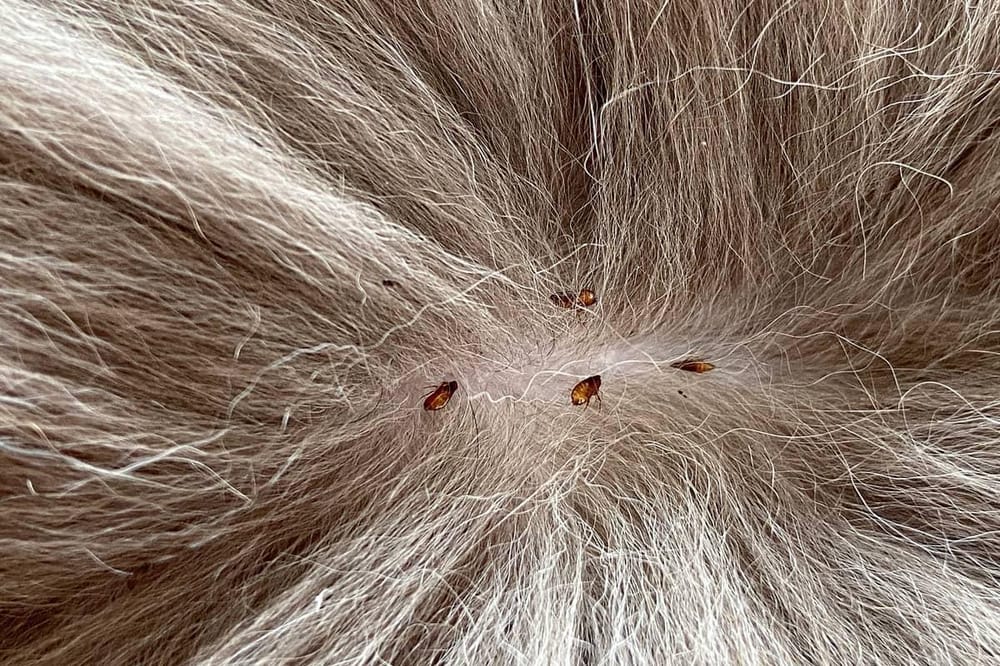
Introduction: Flea Control Is a Campaign, Not a One-Day Event
Few things frustrate pet owners faster than fleas.
You treat your dog.
You wash the bedding.
You vacuum.
For a few days, things seem better.
Then suddenly...
Another flea.
Owners understandably ask:
How do I get rid of fleas on my dog?
After more than 30 years in veterinary medicine, I can tell you this clearly:
Successful flea control means treating both the pet and the environment.
Treating only the fleas you can see is usually not enough.
That is because the adult fleas living on your dog represent only part of the problem. Flea eggs, larvae, and pupae may already be developing in carpets, furniture, bedding, floor cracks, and other areas of the home.
At PetLovers United, we want owners to understand the flea life cycle because once you understand the cycle, flea control makes much more sense.
Why Are Fleas So Hard to Get Rid Of?
Fleas reproduce quickly.
Adult fleas live and feed on animals, but their eggs fall off into the environment.
That means the real flea population may be spread throughout:
- Bedding
- Carpets
- Rugs
- Upholstery
- Floor cracks
- Pet resting areas
The flea life cycle includes:
- Eggs
- Larvae
- Pupae
- Adult fleas
The pupal stage can be especially frustrating because developing fleas are protected inside a cocoon and may emerge later.
This is why owners sometimes think:
“The treatment didn’t work. I’m still seeing fleas.”
But newly emerging fleas may be coming from the environment rather than surviving indefinitely on the dog.
Flea control takes consistency.
What Actually Works for Fleas on Dogs?
1. Use an Effective Flea Preventive
The foundation of flea control is an effective flea-control product appropriate for your dog.
Depending on the individual pet, options may include:
- Oral medications
- Topical products
- Certain collars
- Combination parasite
There is no single product that is best for every dog.
Your veterinarian can help choose based on:
- Age
- Weight
- Health
- Lifestyle
- Other medications
- Local parasite risk
- Other pets in the household
Consistent use is important.
One missed dose can create an opportunity for the flea population to rebound.
2. Treat Every Appropriate Pet in the Household
This is one of the most common reasons flea control fails.
If one dog is treated but another dog or cat in the house is not, fleas still have a place to feed and reproduce.
All susceptible pets generally need an appropriate flea-control plan.
An Important Safety Warning for Cats
Never apply a dog flea product to a cat unless the product is specifically labeled for cats and your veterinarian has confirmed it is appropriate.
Some flea-control ingredients used in dogs can be dangerously toxic to cats.
This is especially important with certain products containing permethrin.
If you have both dogs and cats, tell your veterinarian so the entire household can be treated safely.
3. Vacuum Frequently
Vacuuming helps remove:
- Flea eggs
- Larvae
- Flea dirt
- Environmental debris
Pay particular attention to:
- Pet sleeping areas
- Rugs
- Upholstered furniture
- Along baseboards
- Under furniture
- Cracks and crevices
Dispose of vacuum contents appropriately after cleaning.
Repeated vacuuming is more useful than one heroic cleaning session.
The goal is to continuously reduce the environmental flea population while your pet's preventive controls newly emerging adults.
4. Wash Pet Bedding
Wash bedding, blankets, crate liners, and other washable fabrics your pet uses regularly.
Use normal laundering according to the fabric instructions and dry thoroughly.
Remember to include areas that are easy to forget:
- Couch blankets
- Car blankets
- Pet-bed covers
- Washable crate bedding
Fleas do not limit themselves to the official dog bed.
They go where your dog spends time.
5. Stay Consistent Long Enough to Break the Life Cycle
This is where many owners give up too soon.
You may still see some fleas after beginning treatment because immature flea stages in the environment continue to mature and emerge.
That does not automatically mean the treatment is failing.
Consistent flea prevention allows newly emerging fleas to encounter the treated pet and be controlled before the population can re-establish itself.
Depending on the severity of the infestation and environmental conditions, getting a significant flea problem fully under control may take time.
Do not stop prevention simply because you haven't seen a flea for several days.
Should I Treat My House for Fleas?
Often, environmental control is an important part of resolving an established infestation.
At minimum:
- Vacuum regularly
- Wash pet bedding
- Clean frequently used areas
- Keep all pets appropriately protected
In heavier infestations, additional environmental flea-control products or professional pest-control services may be appropriate.
If using an environmental insecticide:
- Follow the label exactly
- Remove pets as directed
- Keep pets away until the area is safe for re-entry
- Pay special attention to cat, bird, fish, and small-animal safety
More chemical does not mean better flea control.
Safe, correct use matters.
Why Am I Still Seeing Fleas After Treatment?
This is one of the most frustrating parts of flea control.
You may see fleas after treatment because:
- New adults emerging from pupae in the environment
- Another pet is untreated
- Preventive doses were missed
- The product was used incorrectly
- The infestation is heavy
- The product is not appropriate for that pet or situation
Seeing a flea shortly after beginning a control program does not necessarily mean the product has failed.
What matters is whether the infestation is steadily improving over time.
If fleas remain heavy or persistent despite correct treatment, talk with your veterinarian.
Can Fleas Make My Dog Sick?
Yes.
Fleas are more than a nuisance.
They can contribute to several medical problems.
Flea Allergy Dermatitis
Some dogs are allergic to flea saliva.
For these dogs, even a small number of flea bites may trigger intense itching.
Signs can include:
- Severe scratching
- Chewing
- Hair loss
- Red skin
- Scabs
- Skin infection
The lower back and base of the tail are common areas of irritation.
Skin Infection
Repeated scratching and chewing can damage the skin barrier.
Secondary bacterial or yeast infections may develop.
Anemia
Heavy flea infestations can lead to significant blood loss.
This is especially concerning in:
- Puppies
- Small dogs
- Frail pets
- Pets with heavy infestations
Signs may include:
- Pale gums
- Weakness
- Lethargy
- Rapid breathing
Tapeworms
Dogs can acquire the tapeworm Dipylidium caninum by swallowing infected fleas while grooming.
Owners may notice small, rice-like tapeworm segments near the anus or on bedding.
Treating the tapeworm without controlling the fleas can allow reinfection.
How Can I Tell If My Dog Has Fleas?
Adult fleas can be surprisingly difficult to find, especially in dogs with thick coats.
Look for:
- Excessive scratching
- Chewing at the skin
- Hair loss
- Scabs
- Flea dirt
- Live fleas
- Irritation near the tail base
What Is Flea Dirt?
Flea dirt looks like tiny black specks in the coat.
It is digested blood excreted by fleas.
You can sometimes place suspected flea dirt on a damp white paper towel.
If it produces a reddish-brown stain, that supports the possibility that it is flea dirt rather than ordinary debris.
A flea comb can also help detect fleas or flea dirt.
When Should I Call My Veterinarian?
Seek veterinary guidance if your dog has:
- Severe itching
- Significant hair loss
- Open sores
- Skin infection
- Persistent flea infestation despite treatment
- Pale gums
- Weakness
- Heavy flea burden in a puppy
- Tapeworm segments
- Suspected flea allergy dermatitis
- A reaction to a flea-control product
Your dog may need more than flea prevention alone.
Pain, infection, inflammation, or other secondary problems may also need treatment.
When Is It More Urgent?
Seek prompt or urgent veterinary care if your dog has:
- Very pale gums
- Severe weakness
- Collapse
- Difficulty breathing
- Heavy infestation in a very young or frail animal
- Neurologic signs after receiving a flea product
- Significant reaction following a topical or oral treatment
If a pet has been exposed to an inappropriate flea product—especially a cat exposed to a dog-only product—contact a veterinarian promptly.
Common Flea-Control Mistakes
1. Treating Only Once
One treatment may kill adult fleas without breaking the entire environmental life cycle.
Consistency matters.
2. Treating Only One Pet
Every untreated susceptible pet can become part of the flea population.
3. Stopping Prevention Too Soon
The absence of visible fleas for a few days does not mean all flea life stages are gone.
4. Using Products Inconsistently
Late or missed doses create gaps in protection.
Set reminders if needed.
5. Using Unsafe Home Remedies
Owners understandably search for natural solutions, but “natural” does not automatically mean safe.
Avoid unproven remedies such as:
- Essential oils
- Concentrated herbal products
- Harsh chemicals
- Homemade pesticide mixtures
Some can irritate skin or be toxic to pets.
6. Using Dog Products on Cats
This deserves repeating.
Never assume a flea product safe for a dog is safe for a cat.
7. Treating the Dog but Ignoring the Environment
If eggs and immature stages are throughout the home, the cycle continues.
What About Flea Shampoos?
Flea shampoos may kill some fleas present on the dog at the time of bathing.
But they generally do not provide the same long-term control as an effective ongoing preventive.
Think of a flea bath as potentially removing some current fleas—not necessarily solving the infestation.
For significant flea problems, the long-term plan matters much more.
What About Flea Collars?
Some modern flea collars can provide effective protection when appropriately selected and used correctly.
But not every collar is equally effective, and the product must be:
- Appropriate for the species
- Correctly fitted
- Used according to instructions
Ask your veterinarian which type of flea prevention is best for your individual pet rather than assuming all flea collars are interchangeable.
Are Oral or Topical Flea Products Better?
Both can work well when the right product is chosen and used correctly.
The choice may depend on:
- Your dog's medical history
- Ease of administration
- Bathing and swimming habits
- Household composition
- Parasites being targeted
- Owner preference
The best preventive is often the one that is effective, safe for your dog, and used consistently.
Should I Use Flea Prevention Year-Round?
In many regions and households, year-round prevention is often recommended because fleas can survive indoors and seasonal patterns vary.
Your veterinarian can help you determine the most appropriate prevention schedule based on your climate, lifestyle, and local parasite risk.
What I don't recommend is guessing when flea season begins and ends while fleas are already reproducing inside the home.
Modern Veterinary Insight: Flea Control Is Much Better Than It Used to Be
Veterinary flea prevention has changed dramatically during my career.
Today we have highly effective options that can interrupt the flea life cycle far more successfully than many older approaches.
But the product alone isn't the entire strategy.
Successful flea control still depends on:
- Choosing the right preventive
- Giving it correctly
- Giving it consistently
- Treating every appropriate pet
- Managing the environment
- Addressing secondary skin problems
That's why two families can use the same type of flea medication and have very different results.
The program matters.
A Final Thought From Dr. Pam
Fleas can make even very dedicated pet owners feel defeated.
You treat.
You clean.
You vacuum.
And somehow another flea appears.
Don't assume you're failing.
Remember that you're dealing with a life cycle—not just the adult fleas you see today.
The goal is to stop that cycle piece by piece.
Protect the pets.
Clean the environment.
Stay consistent.
And if your dog is miserable, losing hair, developing sores, or still covered in fleas despite treatment, bring your veterinary team into the plan.
Flea control is not a one-day event.
It's a campaign—and consistency wins.
🐾 Want Help Making Smarter Pet Health Decisions?
If this article helped you feel more informed or supported, I’d love to stay connected.
Subscribe to the free weekly PetLovers United newsletter for veterinarian-led education, practical tips, and real-life insights that help you care for the pets you love.
👉 https://www.petlovers-united.com/newsletter
And if you want deeper guidance, tools, and direct support:
Explore the PetLovers United membership, where we help you recognize problems earlier, ask better questions, and confidently care for your pet at every stage of life.
👉 https://www.petlovers-united.com/membership-comparison
PetLovers United | www.petlovers-united.com | Educational Content Only
Enjoying The Blogs? Stay Connected
Join our Free Educational Community to help you make informed decisions and become your pet's best advocate.
Always free. No membership required.

Opening Hours:
Monday – Friday 8am – 9pm
Phone: (310) 495 – 7015
Email: info@PetLoversUnited.com
Address:
Opening Hours:
Monday – Friday 8am – 9pm
Phone: (310) 495 – 7015
Email: info@petlovers-united.com
10 Franklin Hwy.
Suite 188
Newnan, GA 30263
USA