
Dr. Pam Blog
Dr. Pam Blog
Tuesday, November 17, 2026
By Dr. Pamela Johnson, DVM
Tuesday, November 17, 2026
By Dr. Pamela Johnson, DVM
Pet Obesity: Why Just a Few Extra Pounds Can Affect Your Dog's or Cat's Health
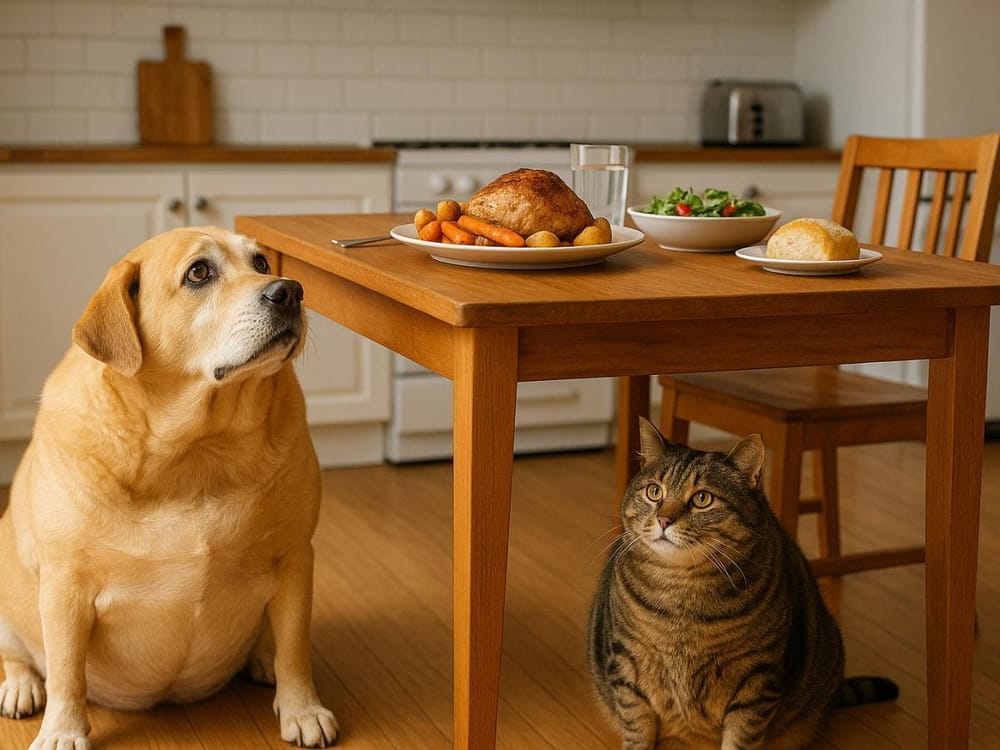
Introduction: When a Little Extra Weight Isn't So Little
One of the most common things I hear during veterinary examinations is:
"But Dr. Pam, he's always been a little chunky."
Or:
"She's just a big-boned cat."
I understand. We love our pets, and feeding them is one of the ways we show affection.
A special treat when we come home. A little extra food because they look hungry. A few bites from our dinner plate.
Those small moments add up.
And because weight gain often happens gradually, it can be difficult to recognize when our pets have become overweight.
But here's something I wish every pet owner understood:
A few extra pounds on a dog or cat can represent a significant percentage of their ideal body weight.
For a small animal, that extra weight can place meaningful stress on joints, affect metabolism, and contribute to chronic health problems.
Obesity isn't simply a cosmetic concern.
It's a medical condition that deserves the same attention we give other preventable health risks.
The good news?
With the right approach, weight management can improve your pet's comfort, mobility, and overall well-being.
What Is Pet Obesity?
Obesity is the excessive accumulation of body fat that can negatively affect health.
Veterinarians generally distinguish between pets that are overweight and those that are obese.
Although definitions vary, animals approximately 10–20% above ideal body weight are often considered overweight, while those more than 20% above ideal may be classified as obese.
However, body weight alone doesn't tell the entire story.
A muscular dog may weigh more than another dog of the same breed without having excess body fat.
Similarly, two cats weighing 12 pounds may have very different body conditions.
That's why veterinarians use body condition scoring, along with weight and muscle assessment, to evaluate nutritional status.
Why Are So Many Dogs and Cats Overweight?
Weight gain generally occurs when calorie intake exceeds energy expenditure over time.
But several factors influence that balance.
Overfeeding
Even small portions of extra food can contribute to weight gain.
This is especially important for small dogs and cats with relatively low daily calorie requirements.
Too Many Treats
Treats, dental chews, table scraps, and food used for training all contribute calories.
Owners may carefully measure meals while unintentionally providing substantial additional calories throughout the day.
Reduced Activity
Indoor cats, senior pets, and dogs with limited exercise opportunities may expend fewer calories.
Spaying and Neutering
Energy requirements may decrease after sterilization.
This doesn't mean spaying or neutering automatically causes obesity.
It means food portions and activity may need to be adjusted afterward.
Aging
As pets age, activity levels and calorie needs may change.
However, age-related muscle loss can occur even when body weight remains stable.
Medical Conditions
Certain diseases and medications can contribute to weight changes.
For example, hypothyroidism in dogs and hyperadrenocorticism may affect body condition.
Veterinary evaluation is important when weight gain seems unexplained or occurs alongside other symptoms.
How Much Does One or Two Extra Pounds Really Matter?
Consider a cat whose ideal weight is 10 pounds.
If that cat weighs 12 pounds, they are approximately 20% above their ideal weight.
For a dog whose ideal weight is 20 pounds, gaining four pounds represents the same proportional increase.
**Example: The impact of extra weight**
Ideal Weight
10 lb
20 lb
50 lb
80 lb
Current weight
12 lb
24 lb
60 lb
96 lb
Above ideal
20%
20%
20%
20%
These are illustrative examples, not diagnostic thresholds for individual animals.
What seems like a small increase to us can be substantial relative to a pet's size.
How Can I Tell If My Dog or Cat Is Overweight?
The most useful starting point is a body condition score.
Many veterinarians use a nine-point scale.
A score of 4–5 out of 9 is generally considered ideal for most adult dogs and cats.
A score of 6–7 indicates excess body fat, while 8–9 indicates more severe obesity.
What Does a Healthy Body Condition Look Like?
For many dogs and cats, you should be able to:
- Feel the ribs beneath a thin covering of fat without pressing hard.
- See a waist when viewing the animal from above.
- Observe an abdominal tuck from the side, although this varies with species and body type.
Cats may have a normal primordial pouch, which shouldn't automatically be mistaken for obesity.
Breed, coat length, age, and muscle condition can also affect appearance.
A veterinary body condition assessment is more reliable than judging by weight or photographs alone.
The Hidden Health Risks of Pet Obesity
Excess body fat doesn't simply sit beneath the skin.
Adipose tissue is metabolically active and can influence inflammatory and hormonal processes.
Obesity can affect several body systems.
1. Arthritis and Joint Pain
Excess weight increases mechanical loading on joints.
It may also contribute to inflammatory processes associated with osteoarthritis.
For dogs with existing arthritis, even modest weight reduction can improve mobility and comfort.
Cats with arthritis may become less willing to jump, climb, or groom.
Weight management can be an important part of their treatment plan.
2. Diabetes Mellitus
Obesity is an important risk factor for insulin resistance and type 2-like diabetes in cats.
Overweight cats have a higher risk of developing diabetes than lean cats.
Dogs develop diabetes through somewhat different disease mechanisms, and obesity isn't as directly linked to canine diabetes as it is in cats.
Nevertheless, maintaining a healthy body condition supports metabolic health in both species.
3. Breathing Difficulties
Excess body fat can increase the work of breathing.
This may be particularly problematic for brachycephalic breeds such as Bulldogs and Pugs, which already have anatomical airway challenges.
Obesity can also complicate respiratory disease in cats.
4. Reduced Mobility and Exercise Tolerance
Overweight pets may tire more easily, avoid physical activity, or become reluctant to climb stairs.
Reduced activity can then contribute to further weight gain.
This creates a difficult cycle.
5. Increased Anesthetic and Surgical Challenges
Obesity can complicate anesthetic management, patient positioning, ventilation, and some surgical procedures.
Risk varies depending on the pet's overall health and the procedure.
This doesn't mean overweight animals cannot safely undergo anesthesia.
It means body condition is one factor the veterinary team considers when planning care.
6. Skin and Grooming Problems
Overweight cats may struggle to reach parts of their bodies during grooming.
This can contribute to matting and poor coat condition.
Skin folds in some overweight dogs may also be prone to irritation.
7. Urinary and Other Health Concerns
Obesity may contribute to reduced activity and difficulty maintaining normal hygiene.
In cats, excess weight and inactivity are among the factors associated with lower urinary tract problems.
However, urinary disease is multifactorial and shouldn't be attributed to weight alone.
Does Obesity Shorten a Pet's Life?
Research suggests that maintaining a lean body condition may support longer survival and better health.
One influential lifetime study of Labrador Retrievers found that dogs maintained in a leaner condition lived a median of approximately 1.8 years longer than their paired counterparts that received more food.
Other observational studies have also identified associations between overweight body condition and reduced lifespan.
These findings are important, but they shouldn't be interpreted as a guarantee that weight loss will add a specific number of years to every pet's life.
The larger lesson is that healthy body condition is an important component of long-term health.
Why Doesn't Feeding Less Always Work?
When owners discover their pet is overweight, the first instinct is often to reduce the amount of regular food.
Sometimes modest portion adjustments are appropriate.
But simply cutting a maintenance diet in half can create problems.
A pet may receive too few essential nutrients if the diet is severely restricted.
They may also become excessively hungry, leading to food-seeking behavior and difficulty maintaining the plan.
Veterinary therapeutic weight-management diets are often designed to provide adequate essential nutrients while reducing calorie intake.
Some also contain adjusted fiber and protein levels to support satiety and lean tissue maintenance.
The right plan depends on the animal's health and nutritional needs.
Why Rapid Weight Loss Is Especially Dangerous for Cats
Cats require particular caution during weight-loss programs.
When an overweight cat stops eating or experiences severe calorie restriction, it may develop hepatic lipidosis, a potentially life-threatening liver condition.
This is one reason cats should never be placed on a crash diet.
Weight reduction should be gradual, controlled, and monitored by a veterinarian.
For many cats, a commonly used target is approximately 0.5–2% of body weight per week, adjusted for the individual patient.
Dogs may tolerate somewhat faster rates, often around 1–2% of body weight per week under veterinary supervision.
These are general clinical ranges, not goals that should be applied without an individualized plan.
How to Help Your Dog or Cat Lose Weight Safely
Step 1: Schedule a Veterinary Weight Assessment
Before starting, determine:
- Current weight
- Estimated ideal weight
- Body condition score
- Muscle condition
- Relevant medical history
- Whether diagnostic testing is appropriate
Your veterinarian can also help identify an achievable initial weight-loss target.
Step 2: Determine Daily Calorie Needs
Calorie requirements vary by species, size, age, activity, reproductive status, and metabolism.
Pet food feeding guides provide starting estimates, but they aren't individualized prescriptions.
A veterinarian can calculate an appropriate calorie target and adjust it based on actual progress.
Step 3: Measure Food Accurately
Using a kitchen scale to weigh food in grams is often more accurate than relying on measuring cups.
Small measuring errors can add up, especially in cats and small dogs.
Step 4: Account for Treats
Treats should generally represent no more than about 10% of daily calories, and pets on weight-loss plans may need an even smaller allowance.
Ask your veterinarian whether some of the daily food ration can be reserved for treats or training.
Step 5: Increase Activity Gradually
For dogs, this may include:
- Short, frequent walks
- Gentle play
- Appropriate swimming or rehabilitation activities
- Gradually increased activity as tolerated
For cats, consider:
- Interactive wand toys
- Food puzzles
- Short play sessions
- Encouraging movement between feeding stations
- Safe climbing opportunities when mobility allows
Exercise should be adjusted for pets with arthritis, heart disease, respiratory disease, or other limitations.
Step 6: Monitor Progress
Regular weigh-ins help determine whether the plan is working.
Many veterinary teams recommend reassessment every two to four weeks initially.
If weight loss is too rapid, too slow, or accompanied by reduced appetite or lethargy, the plan should be reviewed.
What About Weight-Loss Pet Food?
Not all foods marketed as light, healthy weight, or weight management are equivalent.
Some provide modest calorie reduction.
Others are therapeutic diets specifically designed for structured weight-loss programs.
Important considerations include:
- Calories per serving
- Protein content
- Nutrient density
- Fiber characteristics
- Digestibility
- Palatability
- Clinical evidence
- Manufacturer quality control
For pets requiring substantial calorie restriction, a veterinary therapeutic weight-loss diet may be especially useful.
The goal isn't simply to feed fewer calories.
It's to reduce body fat while maintaining muscle and adequate nutrition.
How Can I Tell if My Pet Is Losing Fat Instead of Muscle?
This is an important question, particularly for older pets.
Weight loss isn't automatically healthy.
A pet may lose muscle because of inadequate nutrition, aging, or disease.
Your veterinary team can evaluate both body condition score and muscle condition score.
During healthy weight management, we want to reduce excess body fat while preserving lean tissue as much as possible.
If your pet is losing weight unexpectedly, don't assume it's a positive change.
Unintentional weight loss warrants veterinary evaluation.
Common Myths About Pet Obesity
MYTH 1: “A Little Extra Weight Doesn't Hurt.”
FACT: Even modest excess weight can affect joints, mobility, and metabolic health.
MYTH 2: “My Pet Is Just Big-Boned.”
FACT: Frame size varies, but body condition scoring helps distinguish normal build from excess body fat.
MYTH 3: “If My Pet Is Hungry, I'm Not Feeding Enough.”
FACT: Food-seeking behavior doesn't always reflect nutritional need.
MYTH 4: “Exercise Alone Will Fix Obesity.”
FACT: Physical activity helps, but calorie management is usually essential for meaningful weight loss.
MYTH 5: “I Can Just Cut My Pet's Food in Half.”
FACT: Severe restriction may lead to inadequate nutrient intake and can be dangerous, particularly for cats.
MYTH 6: “Overweight Cats Should Lose Weight Quickly.”
FACT: Rapid weight loss or prolonged food refusal can place cats at risk for hepatic lipidosis.
MYTH 7: “Treats Don't Count.”
FACT: Treats and table scraps contribute to total daily calorie intake.
MYTH 8: “My Senior Pet Doesn't Need Weight Management.”
FACT: Older pets benefit from appropriate body condition, although preserving muscle is especially important.
MYTH 9: “All Weight-Loss Foods Work the Same Way.”
FACT: Diets differ in calorie density, nutrient composition, and supporting research.
MYTH 10: “Weight Loss Is Only About Appearance.”
FACT: Healthy weight supports comfort, mobility, metabolic health, and quality of life.
Five Questions to Ask Your Veterinarian
- What is my pet's body condition score and ideal weight range?
- How many calories should my pet eat each day?
- Would a therapeutic weight-management diet be appropriate?
- How quickly should my pet lose weight?
- How often should we check weight and muscle condition?
A Final Thought From Dr. Pam
I know how much joy we get from treating our pets.
That little tail wag when you reach for the treat jar.
The cat who appears the moment you open the kitchen cupboard.
Food is part of our relationship with them.
But love doesn't have to mean extra calories.
Sometimes love means measuring portions carefully.
Sometimes it means replacing a high-calorie treat with playtime or affection.
And sometimes it means helping a pet lose weight so they can move more comfortably and enjoy the activities they love.
I don't want owners to feel judged when their pet is overweight.
I want them to understand that body condition is something we can evaluate, monitor, and often improve.
And I especially want owners to know that healthy weight management is not about making a pet look thinner. It's about helping them feel better.
The Bottom Line
Pet obesity is a medical concern, not simply an appearance issue.
Remember:
- Excess body fat can affect multiple organ systems.
- A few extra pounds can represent a large percentage of a small pet's ideal weight.
- Body condition scoring is more useful than weight alone.
- Obesity can worsen arthritis and mobility problems.
- Overweight cats face increased diabetes risk.
- Excess weight may complicate breathing and anesthetic care.
- Treats and table scraps contribute meaningful calories.
- Spaying, neutering, aging, and activity changes can affect calorie needs.
- Crash dieting is unsafe, particularly for cats.
- Therapeutic weight-loss diets may help maintain nutrition during calorie restriction.
- Regular weigh-ins are important.
- Muscle condition should be monitored alongside body weight.
- Sustainable weight management can improve comfort and quality of life.
The most important lesson: Maintaining a healthy weight is one of the most meaningful ways we can support our pets' long-term health.
🐾 Want Help Making Smarter Pet Health Decisions?
If this article helped you feel more informed or supported, I’d love to stay connected.
Subscribe to the free weekly PetLovers United newsletter for veterinarian-led education, practical tips, and real-life insights that help you care for the pets you love.
👉 https://www.petlovers-united.com/newsletter
And if you want deeper guidance, tools, and direct support:
Explore the PetLovers United membership, where we help you recognize problems earlier, ask better questions, and confidently care for your pet at every stage of life.
👉 https://www.petlovers-united.com/membership-comparison
PetLovers United | www.petlovers-united.com | Educational Content Only
Enjoying The Blogs? Stay Connected
Join our Free Educational Community to help you make informed decisions and become your pet's best advocate.
Always free. No membership required.

Opening Hours:
Monday – Friday 8am – 9pm
Phone: (310) 495 – 7015
Email: info@PetLoversUnited.com
Address:
Opening Hours:
Monday – Friday 8am – 9pm
Phone: (310) 495 – 7015
Email: info@petlovers-united.com
10 Franklin Hwy.
Suite 188
Newnan, GA 30263
USA