
Dr. Pam Blog
Dr. Pam Blog
Thursday, October 22, 2026
By Dr. Pamela Johnson, DVM
Thursday, October 22, 2026
By Dr. Pamela Johnson, DVM
Is My Cat in Pain? Subtle Signs Owners Often Miss
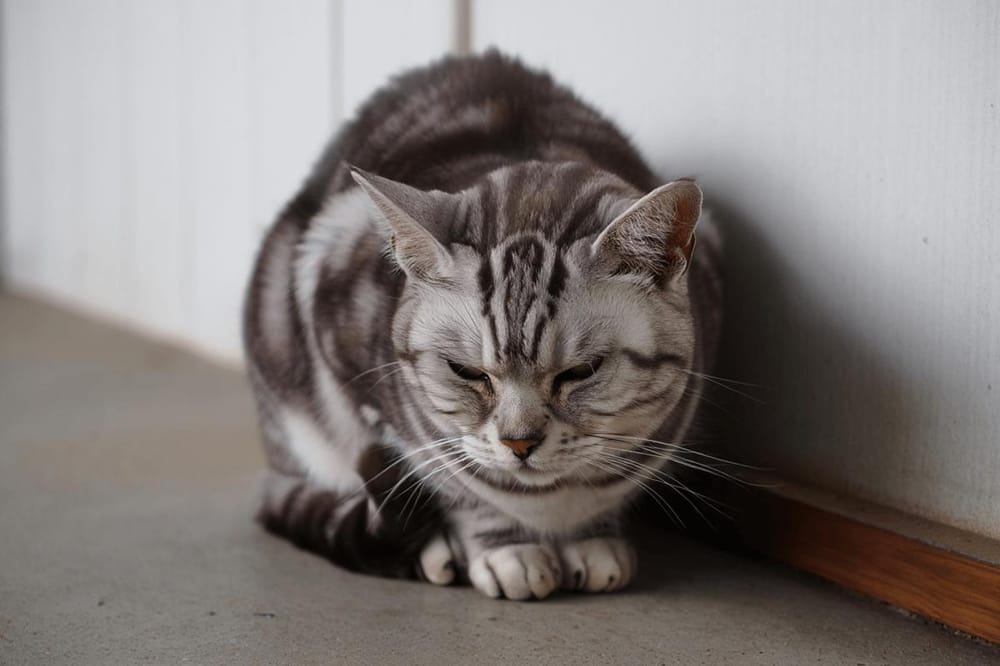
Introduction: Cats Rarely Announce That Something Hurts
When most people picture an animal in pain, they imagine something obvious.
Crying.
Limping.
Holding up a leg.
Refusing to move.
Cats don't always read that script.
A painful cat may still eat.
They may still walk.
They may still greet you.
They may even purr.
Instead of announcing:
“I hurt.”
your cat may simply stop jumping onto the kitchen counter.
They may sleep downstairs instead of coming to bed.
They may hesitate before entering the litter box.
They may stop grooming one area—or begin obsessively licking another.
They may become quieter.
Grumpier.
Less playful.
Or just seem...
different.
These changes are easy to dismiss as personality, aging, or mood.
But sometimes they're the earliest clues we have that a cat is uncomfortable.
The key isn't waiting for your cat to show dramatic pain.
It's knowing your cat's normal well enough to recognize when normal begins to change.
Why Are Cats So Good at Hiding Pain?
Cats evolved as both predators and potential prey.
Showing obvious weakness can be disadvantageous for an animal trying to survive.
Domestic cats may live safely on our couches now, but many of those deeply rooted behavioral tendencies remain.
Pain therefore doesn't always produce dramatic outward behavior.
Instead, cats may adapt.
They change how they move.
Where they sleep.
How high they jump.
How much they interact.
How they groom.
How they position their body.
Owners often don't see:
“My cat is in pain.”
They see:
“My cat doesn't do that anymore.”
That difference matters.
Pain Doesn't Always Mean Crying
One of the biggest misconceptions I hear is:
“She can't be in pain. She never cries.”
Vocalization is only one possible response to pain.
Many painful cats remain quiet.
Some become more vocal.
Others become less vocal.
Some cats cry only during a specific movement or when a painful area is touched.
So don't use silence as a pain test.
A quiet cat can still be a painful cat.
1. Your Cat Stops Jumping as High
This is one of my favorite questions to ask about an older cat:
“Where did your cat used to jump that they don't jump anymore?”
Maybe your cat used to jump directly onto the kitchen counter.
Now they use a chair first.
Maybe they used to sleep on the top of the cat tree.
Now they stay on the lowest platform.
Maybe they used to jump onto your bed effortlessly.
Now they hesitate at the edge.
Owners often interpret this as:
“He's just getting older.”
But aging itself isn't a diagnosis.
Reduced jumping can be associated with:
- Arthritis
- Joint pain
- Muscle loss
- Back pain
- Injury
- Weakness
- Neurologic disease
Sometimes the cat hasn't stopped jumping.
They've simply developed a new strategy for doing it.
Pay attention to that.
2. Your Cat Hesitates Before Jumping
Watch the moments before the movement.
A painful cat may:
- Look up and down several times
- Rock backward before jumping
- Reposition repeatedly
- Stretch upward instead of jumping
- Use intermediate furniture
- Pull themselves up with the front legs
- Abandon the jump entirely
That hesitation can tell us something.
Your cat may be calculating whether a movement that used to be effortless is going to hurt.
3. Your Cat Comes Down Differently
Owners often watch how well a cat gets up.
Also watch how they get down.
A cat with discomfort may:
- Climb down instead of jumping
- Pause before descending
- Land awkwardly
- Avoid tall surfaces
- Use furniture like stairs
- Land primarily on the front limbs
Changes in descending can be just as informative as changes in jumping upward.
4. Your Cat Uses the Stairs Differently
Pain can change stair use.
You might notice your cat:
- Moves more slowly
- Takes one step at a time
- Pauses frequently
- Avoids stairs
- “Bunny hops”
- Uses a different route through the house
- Stays primarily on one floor
This can be especially important in senior cats.
If food, water, favorite resting areas, and litter boxes are all on different floors, pain can quietly make normal daily activities much harder.
5. Your Cat Isn't Grooming Like They Used To
A healthy cat's grooming habits can tell us a lot.
Pain may make twisting, bending, or reaching uncomfortable.
You may begin noticing:
- Greasy fur
- Dandruff
- Matting
- Clumping
- An unkempt coat
- Areas that aren't being groomed normally
The lower back and hindquarters may become especially difficult for a cat with arthritis or spinal discomfort to reach.
A declining coat isn't always simply:
“My cat is getting old.”
Sometimes your cat can no longer comfortably reach the area.
6. Your Cat Is Grooming Too Much
The opposite can happen too.
Some cats repeatedly lick or chew at an uncomfortable area.
Excessive grooming can have many causes, including:
- Skin disease
- Allergies
- Parasites
- Stress
- Neuropathic discomfort
- Pain
So overgrooming isn't automatically behavioral.
Where the cat is licking matters.
And so does everything else happening with the cat.
7. Your Cat Is Sleeping More—or Sleeping Somewhere Different
Cats sleep a lot.
That's normal.
The more useful question is:
Has your cat's sleeping pattern changed?
A painful cat may:
- Sleep more
- Rest more deeply
- Stop moving between favorite locations
- Choose lower surfaces
- Stop sleeping with the family
- Hide to sleep
- Avoid favorite beds that are difficult to enter
- Stay in one location for long periods
Sometimes the biggest clue isn't increased sleep.
It's where the cat now chooses to sleep.
If your cat spent ten years sleeping on your bed and suddenly sleeps on the floor, ask why.
Maybe getting onto the bed has become difficult.
8. Your Cat Starts Hiding
Cats hide for many reasons.
But a new increase in hiding deserves attention.
Painful or sick cats may seek quiet, protected spaces.
You may find them:
- Under beds
- Inside closets
- Behind furniture
- In unused rooms
- In boxes
- Away from other pets
Away from other pets
A cat who has always enjoyed hiding isn't necessarily telling you something new.
A social cat who suddenly disappears for most of the day might be.
Change from baseline matters more than the behavior by itself.
9. Your Friendly Cat Becomes Irritable
Pain can change tolerance.
A previously affectionate cat may:
- Swat when touched
- Bite unexpectedly
- Growl
- Hiss
- Avoid being picked up
- Leave when petted
- React when a particular body part is touched
- Become less tolerant of other pets
This isn't necessarily your cat becoming:
“Mean.”
Pain changes behavior.
A cat protecting a painful hip, abdomen, mouth, or back may be trying to prevent an interaction they expect will hurt.
Sudden aggression deserves a medical evaluation before being treated as purely behavioral
10. Your Cat Stops Wanting to Be Picked Up
This can be surprisingly important.
Being lifted places pressure on different parts of the body.
Cats with:
- Arthritis
- Back pain
- Abdominal pain
- Injuries
- Chest discomfort
may begin resisting being picked up.
They may tense.
Vocalize.
Scramble away.
Bite.
Or simply start avoiding you when they think you're about to lift them.
Don't assume your cat suddenly stopped loving affection.
The way you're providing affection may have become uncomfortable.
11. Your Cat's Posture Changes
Pain can show up in the way a cat holds their body.
You might notice:
- A hunched posture
- Tucked abdomen
- Head held lower
- Reduced movement
- Tense muscles
- Protecting one limb
- Reluctance to stretch
- Sitting or lying differently
- Difficulty getting comfortable
A cat may repeatedly reposition because no position feels quite right.
Body posture should always be interpreted with the rest of the clinical picture.
12. Your Cat's Face Looks Different
Veterinary professionals increasingly recognize that facial expression can provide useful clues about feline pain.
Changes may involve:
- Ears held differently
- Eyes appearing narrowed or squinted
- Tension around the muzzle
- Changes in whisker position
- Head held lower
These features are incorporated into validated tools such as the Feline Grimace Scale, which helps trained observers assess acute pain.
But I don't want owners relying on one facial expression to diagnose pain at home.
Instead, use it as another clue.
Face + posture + behavior + movement + appetite + history gives us a much better picture.
13. Your Cat's Appetite Changes
Pain can reduce appetite.
Dental pain may make chewing uncomfortable.
Abdominal pain may cause a cat to approach food and then walk away.
Musculoskeletal pain may make reaching a bowl difficult.
A painful cat may:
- Eat less
- Eat more slowly
- Drop food
- Chew differently
- Prefer softer foods
- Walk toward food and then leave
- Stop eating entirely
Loss of appetite in cats deserves attention.
Cats that eat very little or stop eating can develop additional medical problems, particularly if poor intake continues.
Don't assume a cat will simply eat when they get hungry enough.
14. Your Cat's Litter-Box Habits Change
This is another major clue.
Pain can affect litter-box behavior in several ways.
A cat with arthritis may find it painful to:
- Step over a high-sided box
- Walk downstairs to the litter box
- Squat
- Dig
- Maintain posture long enough to eliminate
A cat with urinary or gastrointestinal pain may associate the litter box with discomfort.
You may see:
- Urination outside the box
- Defecation outside the box
- Hesitation entering
- Perching on the edge
- Frequent trips
- Straining
- Reduced digging
- Avoidance
Never assume sudden litter-box changes are spite.
Investigate the cat before blaming the behavior.
An Important Urinary Warning
If your cat—especially a male cat—is repeatedly straining and producing little or no urine:
That's an emergency.
A urethral obstruction can become life-threatening.
15. Your Cat Stops Playing
Play requires movement.
Stalking.
Crouching.
Pouncing.
Jumping.
Twisting.
Running.
If those movements hurt, play may quietly disappear.
You may notice:
- Less interest in toys
- Watching the toy but not chasing
- Playing while lying down
- Shorter play sessions
- No longer chasing other cats
- Reduced nighttime activity
Owners may say:
“She grew out of playing.”
Sometimes that's true.
Sometimes playing became uncomfortable.
What About Purring? Doesn't That Mean My Cat Is Happy?
Not necessarily.
Cats certainly purr when they're comfortable and content.
But cats can also purr in other contexts, including when they're stressed, frightened, ill, or painful.
So:
Purring does not rule out pain.
If your cat is purring while hunched, hiding, not eating, or behaving abnormally, don't allow the purr alone to reassure you.
Look at the whole cat.
Does My Cat Have Arthritis?
Arthritis is an especially important source of underrecognized chronic pain in cats.
The signs can be subtle because many cats don't develop the obvious limp owners expect.
Instead, you may notice:
- Reduced jumping
- Hesitation
- Less climbing
- Difficulty with stairs
- Reduced grooming
- More sleeping
- Irritability
- Reduced play
- Litter box difficulty
- Changes in favorite resting locations
This is why I don't want owners assuming:
“He's slowing down because he's old.”
Sometimes what looks like aging is actually treatable pain.
Dental Pain Can Be Easy to Miss Too
Cats can continue eating despite significant oral disease.
Dental pain may be associated with:
- Bad breath
- Drooling
- Dropping food
- Chewing on one side
- Pawing at the mouth
- Reduced grooming
- Preferring softer food
- Approaching food but hesitating
- Irritability around the face
But some cats show very little outward evidence.
Eating does not prove that a cat's mouth is pain-free.
Pain Can Change Personality
One of the most overlooked clues is a personality change.
Pain may make a cat:
- Less affectionate
- More clingy
- More withdrawn
- More irritable
- Less tolerant
- More anxious
- Less interactive
Sometimes an owner tells me:
“She's just not herself.”
I take that seriously.
You know what normal looks like for your cat.
A vague but persistent change can be meaningful even when you can't immediately describe what's wrong.
How Do Veterinarians Determine Whether a Cat Is in Pain?
There isn't one universal pain test.
Veterinarians combine multiple pieces of information:
- Owner observations
- Medical history
- Physical examination
- Gait and mobility
- Posture
- Facial expression
- Response to palpation
- Muscle condition
- Joint mobility
- Appetite
- Grooming
- Behavior
Depending on what we find, additional diagnostics may include:
- Bloodwork
- Urinalysis
- Radiographs
- Ultrasound
- Dental radiographs
- Neurologic evaluation
- Other targeted testing
Your observations at home are extremely valuable because a cat may behave differently in the veterinary hospital than they do in their familiar environment.
Take Videos
This is one of my favorite practical tips for cat owners.
If you notice something unusual, record it.
Take a short video of your cat:
- Walking
- Going up stairs
- Going down stairs
- Jumping
- Getting onto furniture
- Getting into the litter box
- Playing
- Performing the movement that concerns you
Your cat may refuse to demonstrate the problem at the hospital.
A 20-second phone video can provide valuable information.
Learn Your Cat's Baseline Normal
Don't wait until your cat is sick to start observing.
Know:
- Where they normally sleep
- How high they normally jump
- How they use stairs
- How they groom
- How often they play
- How they enter the litter box
- How much they eat
- How they interact with you
- How they interact with other animals
- Their normal walking pattern
You don't need to obsess over every movement.
You simply need a mental picture of:
“This is my cat's normal.”
Because recognizing abnormal becomes much easier when you know the baseline.
How Is Pain in Cats Treated?
Treatment depends entirely on why the cat hurts.
Modern feline pain management may include combinations of:
- Treating the underlying disease
- Veterinary-prescribed pain medication
- Anti-inflammatory therapy when medically appropriate
- Osteoarthritis-specific therapies in selected cats
- Dental treatment
- Surgery when indicated
- Rehabilitation or physical therapy
- Weight management
- Environmental modification
- Mobility support
- Other multimodal approaches
The goal isn't simply:
“Give a pain medication.”
It's:
Identify the source of pain and build the safest, most effective plan for that cat.
Helping a Painful Cat at Home
Small environmental changes can make an enormous difference.
For cats with mobility problems, consider:
- Low-entry litter boxes
- Ramps or pet steps
- Food and water on the cat's primary floor
- Non-slip surfaces
- Easily accessible resting areas
- Warm, comfortable bedding
- Intermediate steps to favorite furniture
- Multiple litter boxes
- Raised food or water bowls when appropriate
We don't necessarily want to stop a cat from doing the things they love.
Sometimes we simply need to make those things easier.
Never Give Human Pain Medication Without Veterinary Direction
This deserves emphasis.
Do not reach into your medicine cabinet and give your cat a human pain reliever.
Medications that people routinely use can be extremely dangerous to cats.
Acetaminophen, for example, can cause severe and potentially fatal toxicity in cats.
Other medications may cause gastrointestinal, kidney, or other serious complications.
Even veterinary medications require appropriate dosing and patient selection.
If you think your cat hurts:
Call your veterinarian.
Don't improvise.
Common Mistakes to Avoid
“He's Just Getting Old.”
Age isn't a diagnosis.
Older cats commonly develop painful conditions that may be treatable or manageable.
“She's Eating, So She Can't Be Hurting.”
Cats may continue eating despite substantial pain.
“He Isn't Crying.”
Many painful cats never vocalize.
“She's Purring, So She's Fine.”
Purring does not rule out pain.
“He Can Still Jump.”
The question isn't only whether he can jump.
Ask whether he jumps as often, as high, and as easily as before.
“She Doesn't Limp.”
Chronic feline pain—especially arthritis—doesn't always produce an obvious limp.
“He's Grumpy Because He's Old.”
New irritability deserves investigation.
“She's Peeing Outside the Box Because She's Mad.”
Medical problems and pain should be considered before labeling it behavioral.
“I'll Give Her Something From My Medicine Cabinet.”
Never give human pain medication without explicit veterinary direction.
When Should You Call Your Veterinarian?
Schedule an evaluation when you notice persistent changes such as:
- Reduced jumping
- Difficulty with stairs
- Limping
- Reduced grooming
- Overgrooming
- Increased hiding
- New aggression or irritability
- Reduced play
- Changes in appetite
- Litter box changes
- Difficulty getting comfortable
- Changes in posture
- Reluctance to be touched or picked up
- A persistent change from your cat's normal behavior
You don't have to wait until you're certain your cat is in pain.
The change itself is enough to start the conversation.
When Is Pain an Emergency?
Seek urgent veterinary care if your cat has:
- Difficulty breathing or open-mouth breathing
- Major trauma
- Severe or rapidly worsening pain
- Collapse
- Sudden inability to walk
- Sudden paralysis or severe weakness
- Seizures
- A severely painful or distended abdomen
- Repeated vomiting with significant pain or lethargy
- Sudden painful inability to use one or both rear legs
- Repeated urinary straining with little or no urine
A cat with sudden hind-limb weakness or paralysis—particularly with severe pain, cold rear paws, or breathing difficulty—may have a serious cardiovascular emergency such as an arterial thromboembolism.
And a male cat repeatedly straining without producing urine may have a urethral obstruction.
Those situations should not wait for a routine appointment.
Modern Veterinary Insight: Mobility Is a Vital Sign at Home
In the veterinary hospital, we measure things like:
- Temperature
- Heart rate
- Respiratory rate
- Body weight
But at home, you have access to another incredibly useful measurement:
How your cat lives.
Can they still reach their favorite window?
Do they jump onto the bed?
Can they groom their lower back?
Do they chase the toy?
Do they climb the cat tree?
Do they comfortably enter the litter box?
Do they still meet you in the kitchen?
These everyday activities create a picture of functional health.
And when that picture changes, it may tell us about pain long before a cat cries out.
That's why your observations matter so much.
A Final Thought From Dr. Pam
One of the hardest things about feline pain is that cats don't always give us the signs we're expecting.
They don't have to cry.
They don't have to limp.
They don't have to stop eating.
Sometimes the first sign is simply:
“She doesn't sleep with me anymore.”
Or:
“He uses the chair to get onto the counter now.”
Or:
“She's become grumpy when I pick her up.”
Those details may sound small.
They're not.
Your cat's everyday routines tell a story about how their body feels.
So don't just watch for dramatic illness.
Watch for change.
And please don't automatically write those changes off as old age.
Sometimes what looks like:
“My cat is slowing down.”
is actually:
“My cat hurts.”
And recognizing that difference may give us an opportunity to help them feel better.
Bottom Line
Cats often hide pain remarkably well.
Watch for changes in:
- Jumping
- Stair use
- Grooming
- Sleeping locations
- Hiding
- Social interaction
- Irritability
- Willingness to be picked up
- Posture
- Facial expression
- Appetite
- Litter box habits
- Play
- Walking and mobility
- Overall personality
Remember:
- Cats do not have to cry to be in pain
- Cats can still eat when they're painful
- Cats can purr while uncomfortable or ill
- Arthritis doesn't always cause obvious limping
- “Slowing down” should not automatically be dismissed as aging
- Sudden aggression can have a medical cause
- Litter box changes can indicate pain
- Your cat's normal routine provides valuable information
- Home videos can help your veterinarian evaluate subtle changes
- Pain treatment should be individualized to the underlying cause
- Never give human pain medications without veterinary direction
Most importantly:
Don't wait for your cat to tell you they hurt in a human way.
Learn how your cat communicates—and pay attention when their normal begins to change.
🐾 Want Help Making Smarter Pet Health Decisions?
If this article helped you feel more informed or supported, I’d love to stay connected.
Subscribe to the free weekly PetLovers United newsletter for veterinarian-led education, practical tips, and real-life insights that help you care for the pets you love.
👉 https://www.petlovers-united.com/newsletter
And if you want deeper guidance, tools, and direct support:
Explore the PetLovers United membership, where we help you recognize problems earlier, ask better questions, and confidently care for your pet at every stage of life.
👉 https://www.petlovers-united.com/membership-comparison
PetLovers United | www.petlovers-united.com | Educational Content Only
Enjoying The Blogs? Stay Connected
Join our Free Educational Community to help you make informed decisions and become your pet's best advocate.
Always free. No membership required.

Opening Hours:
Monday – Friday 8am – 9pm
Phone: (310) 495 – 7015
Email: info@PetLoversUnited.com
Address:
Opening Hours:
Monday – Friday 8am – 9pm
Phone: (310) 495 – 7015
Email: info@petlovers-united.com
10 Franklin Hwy.
Suite 188
Newnan, GA 30263
USA