
Dr. Pam Blog
Dr. Pam Blog
Monday, November 23, 2026
By Dr. Pamela Johnson, DVM
Monday, November 23, 2026
By Dr. Pamela Johnson, DVM
How to Recognize Fear, Anxiety, and Stress During Veterinary Visits
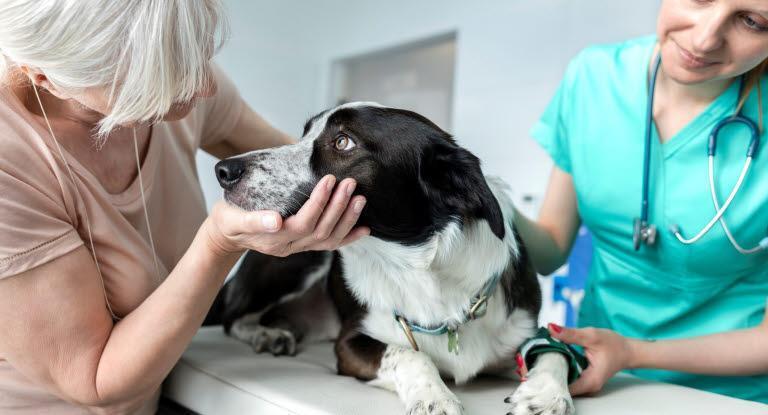
Introduction: Your Pet May Be Telling You They're Afraid
Your dog walks happily into the veterinary hospital.
But once inside the examination room, something changes.
He begins licking his lips, turns his head away, and refuses the treats he normally loves.
Or perhaps your cat sits completely still inside her carrier.
She isn't hissing or growling, so you assume she's doing fine.
But her ears are flattened, her pupils are enlarged, and her body is pressed tightly against the back of the carrier.
Both pets may be experiencing significant fear or stress.
One of the most important things I've learned throughout my veterinary career is that animals communicate discomfort long before they bite, scratch, growl, or attempt to escape.
The challenge is learning to recognize what they're telling us.
Veterinary visits involve unfamiliar smells, sounds, people, animals, and handling.
Even pets that are relaxed at home may feel vulnerable in a clinical environment.
Understanding their body language allows us to respond earlier, reduce unnecessary distress, and make veterinary care safer for everyone involved.
What's the Difference Between Fear, Anxiety, and Stress?
These terms are closely related, but they aren't identical.
Fear
Fear is a response to something an animal perceives as an immediate threat.
A dog may become frightened when an unfamiliar person approaches with a thermometer.
A cat may react fearfully when removed from its carrier.
Anxiety
Anxiety involves anticipation of a possible threat.
A dog that previously experienced a frightening veterinary visit may begin trembling as soon as the car turns toward the hospital.
A cat may hide when its owner brings out the carrier.
Stress
Stress refers to the body's physical and behavioral response to challenges or perceived threats.
Stress can involve changes in heart rate, breathing, muscle tension, and behavior.
Not all stress is harmful, but intense or prolonged distress can interfere with a pet's welfare and ability to tolerate handling.
Fear, anxiety, and stress often overlap during veterinary visits.
Why Do Veterinary Visits Make Some Pets Anxious?
Imagine experiencing a medical examination without understanding why it's happening.
Someone unfamiliar approaches you.
You smell other animals.
You hear barking or unfamiliar equipment.
You may be lifted, restrained, or touched in a painful area.
For our pets, these experiences can be confusing or frightening.
Common stressors include:
- Unfamiliar environments
- Other animals nearby
- Loud noises
- Slippery examination tables
- Unfamiliar handling
- Pain or illness
- Separation from owners
- Previous negative experiences
- Being confined in a carrier
- Unpredictable procedures
Some animals are naturally more cautious or sensitive to novelty.
Others develop fear after repeated stressful experiences.
And pets experiencing pain may have a much lower tolerance for handling.
Early Signs of Fear and Stress in Dogs
Many dogs show subtle body language changes before displaying more obvious distress.
Lip Licking
A dog may briefly flick its tongue across its nose or lips when uncomfortable.
This can be a stress-related behavior, especially when no food is present.
However, lip licking can also occur with nausea or other medical conditions.
Context matters.
Yawning
Yawning isn't always a sign of sleepiness.
Repeated yawning during handling may indicate stress or conflict.
Turning Away
A dog may turn its head or body away from an approaching person.
This can be an attempt to avoid interaction.
Whale Eye
You may notice the whites of a dog's eyes becoming more visible as the dog looks sideways while keeping its head relatively still.
This can occur when a dog is uncomfortable or trying to monitor a perceived threat.
Tense Body Posture
A dog may become stiff, lower its body, tuck its tail, or shift its weight away from a person.
Refusing Treats
A dog that normally accepts treats but suddenly refuses them may be experiencing significant stress.
However, pain, nausea, illness, or lack of appetite can also explain treat refusal.
Excessive Panting
Panting unrelated to heat or physical activity may accompany stress.
Because panting can also indicate pain or respiratory problems, it should be interpreted alongside other signs.
One signal alone doesn't confirm fear. Look for clusters of behaviors and changes from your pet's normal behavior.
More Obvious Signs of Fear in Dogs
As distress increases, dogs may display:
- Trembling
- Pacing
- Repeated attempts to escape
- Hiding behind their owner
- Persistent whining or barking
- Growling
- Snapping
- Biting
These behaviors often indicate that the animal is struggling to cope.
Growling is particularly important.
A growl is communication, not disobedience.
Punishing a dog for growling may suppress the warning without reducing the underlying fear.
That can make future interactions less predictable and potentially more dangerous.
Recognizing Fear and Stress in Cats
Cats frequently respond to frightening situations differently from dogs.
Some become vocal or defensive.
Others become extremely quiet and still.
Freezing
A cat may remain motionless, crouched tightly against the carrier floor.
Owners sometimes interpret this as cooperation.
But freezing can be a fear response.
Flattened or Rotated Ears
Ears held sideways or backward may indicate discomfort, fear, or defensive arousal.
Dilated Pupils
Enlarged pupils can occur during fear or heightened arousal.
Lighting and certain medical conditions also affect pupil size, so this sign must be interpreted in context.
Crouched Body Position
A fearful cat may lower its body, tuck its limbs beneath itself, and attempt to appear smaller.
Tail Held Tightly Against the Body
A tightly wrapped or tucked tail may accompany defensive body posture.
Hiding
A cat may retreat beneath a towel or toward the back of its carrier.
Hiding can be an important coping strategy.
Hissing or Growling
These vocalizations often communicate a desire for more distance.
They shouldn't automatically be interpreted as an inherently aggressive personality.
Swatting or Biting
If earlier warnings are ignored, some cats may use defensive behaviors to stop unwanted contact.
A frightened cat isn't necessarily an aggressive cat. It may simply be trying to protect itself.
Why a Quiet Pet Isn't Always a Comfortable Pet
This is one of the biggest misconceptions I encounter.
Owners may say:
"My cat was so good. She didn't move at all."
Or:
"My dog just stood there and let them do everything."
But stillness doesn't always mean acceptance.
Some animals freeze when frightened.
Others stop resisting because they cannot escape.
We must look at the entire animal:
- Is the body relaxed or rigid?
- Are the ears in a neutral position?
- Is the pet willingly participating?
- Can the pet recover between handling steps?
- Is the pet attempting to avoid contact?
- Is the animal able to engage with food or familiar people?
A truly comfortable pet generally shows more flexible, relaxed behavior than one that is simply immobilized by fear.
How Fear Can Affect the Veterinary Examination
Stress doesn't only affect behavior.
It can also influence clinical measurements.
Fear and excitement may temporarily alter:
- Heart rate
- Respiratory rate
- Blood pressure
- Body temperature
- Blood glucose, particularly in cats
For example, stress-related hyperglycemia can occur in cats during veterinary visits.
This is one reason veterinarians interpret laboratory results and physical findings within the broader clinical picture.
Reducing stress can improve patient welfare and may help us obtain more representative measurements.
What Is Low-Stress Veterinary Handling?
Low-stress handling involves adjusting the environment and examination techniques to reduce fear and unnecessary restraint.
It may include:
- Allowing pets time to acclimate
- Using nonslip surfaces
- Providing towels or familiar bedding
- Examining cats in the bottom half of their carriers when appropriate
- Using gentle, minimal restraint
- Offering treats or other positive reinforcement
- Allowing brief breaks
- Changing the order of procedures
- Using species-appropriate handling techniques
The goal is not to avoid necessary medical care.
It's to accomplish that care while minimizing distress whenever possible.
Sometimes urgent treatment requires more immediate intervention, but even then, thoughtful handling matters.
Why More Restraint Isn't Always Better
When a frightened pet begins struggling, the instinct may be to hold it more tightly.
But increasing physical restraint can intensify fear and defensive behavior.
For some animals, a different handling technique, a brief pause, or appropriate medication may be safer and more humane.
There are circumstances when restraint is medically necessary.
However, the amount and type of restraint should be chosen carefully.
The best approach is not always the one that gets the procedure finished fastest. It's the one that balances medical necessity, safety, and animal welfare.
How Can Owners Prepare Their Dogs for Veterinary Visits?
Practice Gentle Handling at Home
Help your dog become comfortable with brief, positive interactions involving its paws, ears, mouth, and body.
Use rewards and stop before your dog becomes distressed.
Never force handling practice.
Take Positive Practice Visits
If your veterinary hospital offers them, brief visits that involve treats and friendly interaction without medical procedures may help build positive associations.
Bring Familiar Rewards
Ask whether you can bring your dog's favorite treats.
Some pets respond well to food rewards during examinations.
Consider Transportation Stress
A dog that becomes carsick or frightened during travel may already be stressed before arriving.
Discuss motion sickness or travel anxiety with your veterinarian.
Share Your Dog's History
Tell the veterinary team if your dog has previously shown fear, struggled during nail trims, or reacted defensively to handling.
This information helps the team plan a safer visit.
How Can Owners Prepare Their Cats?
Make the Carrier Part of Everyday Life
Don't bring the carrier out only when it's time for a veterinary appointment.
Leave it accessible at home with comfortable bedding.
Allow your cat to explore it voluntarily.
Use Familiar Bedding
A towel or blanket carrying familiar household scents may help your cat feel more secure.
Cover the Carrier
A lightweight towel over the carrier can reduce visual stimulation for some cats.
Ensure adequate ventilation and avoid overheating.
Secure the Carrier During Travel
Place the carrier securely in the vehicle so it doesn't slide or tip.
Avoid Unnecessary Exposure to Other Animals
Keep cats in their carriers in waiting areas.
Ask whether your veterinary hospital can arrange a quieter waiting location or direct room placement.
Never Force a Frightened Cat Out of Its Carrier
When possible, allow the cat to exit voluntarily or use a carrier with a removable top.
The veterinary team may be able to perform part of the examination while the cat remains in the lower half.
Can Medication Help a Fearful Pet?
Yes.
For some pets, veterinarian-prescribed medication before an appointment can significantly improve their ability to tolerate veterinary care.
These medications are sometimes called pre-visit pharmaceuticals.
Depending on the patient, veterinarians may consider medications such as gabapentin, trazodone, or other appropriate options.
The choice depends on the animal's species, medical history, other medications, and previous responses.
Not every medication is appropriate for every pet.
Never give a human sedative, another pet's prescription, or an extra dose without veterinary instructions.
Medication isn't a failure of training.
When appropriately selected, it can be an important welfare tool.
For highly fearful pets, sedation during certain procedures may be safer and less distressing than prolonged physical restraint.
What Should You Do If Your Pet Becomes Overwhelmed During an Appointment?
Speak up.
You know your pet's normal behavior better than anyone.
If you notice trembling, freezing, escalating avoidance, or other signs of distress, tell the veterinary team.
Depending on the situation, appropriate options may include:
- Taking a short break
- Changing the handling approach
- Moving to a quieter area
- Using additional positive reinforcement
- Delaying a nonurgent procedure
- Scheduling a follow-up with pre-visit medication
- Considering sedation when clinically appropriate
Not every appointment can be completely stress-free.
But recognizing distress allows the team to make informed decisions.
Why Positive Veterinary Experiences Matter
Animals learn from experience.
A frightening visit may increase anticipatory anxiety during future appointments.
Over time, some pets begin reacting to the carrier, car ride, parking lot, or hospital entrance before the examination even begins.
Positive experiences can help build more favorable associations.
For some pets, progress happens gradually.
The goal isn't to expect every animal to love veterinary visits.
It's to help them feel as safe and comfortable as possible while receiving necessary care.
Common Myths About Fear and Anxiety at the Vet
MYTH 1: “If My Pet Isn't Growling, They're Not Afraid.”
FACT: Many pets show subtle signs of fear long before vocalizing or struggling.
MYTH 2: “A Cat That Doesn't Move Is Being Cooperative.”
FACT: Freezing can be a response to significant fear.
MYTH 3: “My Dog Is Just Being Stubborn.”
FACT: Avoidance and resistance may reflect fear, pain, or discomfort.
MYTH 4: “More Restraint Will Help My Pet Calm Down.”
FACT: Excessive restraint can intensify distress in some animals.
MYTH 5: “Growling Should Always Be Corrected.”
FACT: Growling communicates discomfort. Punishment can increase risk by suppressing warning signals.
MYTH 6: “Cats Can't Be Trained to Feel Better About Carriers.”
FACT: Gradual, positive carrier training can improve acceptance.
MYTH 7: “Anxiety Medication Means My Pet Is Badly Behaved.”
FACT: Appropriate medication can reduce distress and support safer veterinary care.
MYTH 8: “Veterinary Visits Are Supposed to Be Stressful.”
FACT: Some stress may be unavoidable, but thoughtful preparation and handling can reduce unnecessary fear.
Five Questions to Ask Your Veterinary Team
- What signs of fear or stress are you noticing in my pet?
- Can we adjust the handling approach to help them feel more comfortable?
- Would a quieter appointment time or separate waiting area help?
- Should we consider pre-visit medication for future appointments?
- What can I practice at home to make veterinary visits easier?
A Final Thought From Dr. Pam
Throughout my veterinary career, I've met countless dogs and cats who were labeled difficult, stubborn, or aggressive.
But when we looked more closely, many of those animals were frightened.
They weren't trying to make our jobs harder.
They were communicating that something about the situation felt unsafe.
As veterinary professionals, we have a responsibility to recognize those signals and respond thoughtfully.
And as pet owners, you play an important role, too.
You know your pet's personality, their normal behaviors, and the subtle changes that tell you something isn't right.
When owners and veterinary teams work together, we can often make appointments safer, calmer, and more positive.
Not every pet will walk happily into the hospital.
Not every examination will be completely stress-free.
But every animal deserves to be treated with patience, compassion, and respect.
Sometimes the most important thing we can do is recognize when a pet is asking us to slow down.
The Bottom Line
Fear, anxiety, and stress are common during veterinary visits, but they aren't always obvious.
Remember:
- Dogs and cats communicate fear through body language.
- Early signs may include lip licking, freezing, avoidance, and tense posture
- Growling and hissing are often warnings that an animal needs more space.
- A quiet or motionless pet isn't necessarily relaxed.
- Pain and illness can increase sensitivity to handling.
- Stress may affect certain clinical measurements.
- Low-stress handling can improve patient welfare and safety.
- Excessive restraint may worsen fear.
- Carrier training can help cats feel more comfortable.
- Positive handling practice may help dogs.
- Familiar bedding and quieter environments may reduce stress.
- Veterinarian-prescribed pre-visit medication can be beneficial for selected pets.
- Sedation may be appropriate when necessary for safe, humane care.
- Owners should share their observations with the veterinary team.
- Recognizing early signs of distress creates opportunities to intervene before fear escalates.
The most important lesson: Your pet doesn't have to bite, scratch, growl, or struggle to tell you they're afraid. Learning to recognize the quieter signals can make veterinary care safer and more compassionate.
🐾 Want Help Making Smarter Pet Health Decisions?
If this article helped you feel more informed or supported, I’d love to stay connected.
Subscribe to the free weekly PetLovers United newsletter for veterinarian-led education, practical tips, and real-life insights that help you care for the pets you love.
👉 https://www.petlovers-united.com/newsletter
And if you want deeper guidance, tools, and direct support:
Explore the PetLovers United membership, where we help you recognize problems earlier, ask better questions, and confidently care for your pet at every stage of life.
👉 https://www.petlovers-united.com/membership-comparison
PetLovers United | www.petlovers-united.com | Educational Content Only
Enjoying The Blogs? Stay Connected
Join our Free Educational Community to help you make informed decisions and become your pet's best advocate.
Always free. No membership required.

Opening Hours:
Monday – Friday 8am – 9pm
Phone: (310) 495 – 7015
Email: info@PetLoversUnited.com
Address:
Opening Hours:
Monday – Friday 8am – 9pm
Phone: (310) 495 – 7015
Email: info@petlovers-united.com
10 Franklin Hwy.
Suite 188
Newnan, GA 30263
USA